How to study chess

38 free video tutorials, each tagged by level

What coaches agree on

  • Review every game you play as soon as you finish it, using an engine or a specific focus to find your concrete mistakes.
  • Pinpoint the specific patterns or game phases you are weakest at, from your own games or self-testing, then spend extra practice time drilling exactly those.
Show more
  • Set up a real, physical board sometimes for your calculation and opening practice; it builds the visualization skill you need for over-the-board play.

Common mistakes

  • Playing lots of blitz and bullet games and expecting the volume alone to translate into real rating and skill gains.
  • Memorizing long opening lines instead of understanding the ideas behind them, which leaves you stuck the moment an opponent leaves theory.
How I would study chess if I could start over
Intermediate
How I would study chess if I could start over

Reviewer Practical, credible, and it tells you exactly what tools and habits to use — no fluff.

Moderator The entire video is explicitly 'how I would study chess if I could start over' — a coach with 7 years of teaching experience laying out a structured approach across all five phases of the game (openings, tactics, endgames, strategy, calculation), what's finite vs. infinite to study, and concrete tools. This is the sub-skill itself, not adjacent to it.

3.8
My Chess Study Schedule!
Intermediate
My Chess Study Schedule!

Reviewer Specific, credible, and self-critical - a real schedule with real reasoning behind each piece.

Moderator Directly about a study schedule, structured by improvement stage from rank beginner to 2000-rated. This is the sub-skill, full stop.

3.8
How I Would Study Chess If I could Start Over
Beginner
How I Would Study Chess If I could Start Over

Reviewer The guess-the-move-before-you-see-it habit alone is worth adopting.

Moderator Exactly a 'how to study' video: focus on opening principles over memorization, avoid clickbait trap-openings, play longer time controls before blitz, and a concrete play-learn-train framework. Direct hit on the skill.

3.6
My Chess Study Routine
Intermediate
My Chess Study Routine

Reviewer Solid, concrete routine with real reasoning - a bit familiar if you've seen other 'my study routine' videos.

Moderator A walkthrough of an actual study routine, phase by phase - warmup puzzles, one analyzed game, opening repertoire, calculation practice. Entirely on topic.

3.6
Chess Lesson # 66: How To Study Master Games | Capablanca’s Masterpiece |
Intermediate
Chess Lesson # 66: How To Study Master Games | Capablanca’s Masterpiece |

Reviewer Best kind of study lesson -- gives you an exercise to do, not just something to watch.

Moderator Literally teaches a specific, repeatable technique for studying a master game -- pause at the critical position, generate three candidate moves yourself before reading on, compare against what the master played, and practice calculating without moving pieces. A genuine study method, not just game commentary dressed up as one.

3.6
How to Study Chess | Chess Meditations
Intermediate
How to Study Chess | Chess Meditations

Reviewer Concrete enough to copy directly into your own routine.

Moderator This is a real, serious player laying out their actual training routine in detail -- game analysis as the top priority, how long to spend, which games to pick, then moving into problem-solving as method two. Exactly what 'how to study chess' should mean.

3.6
If I Had to Start Chess Over, Here’s What I’d Do
Beginner
If I Had to Start Chess Over, Here’s What I’d Do

Moderator This is a full roadmap for how to structure your improvement - the nine skills to train and how to train each one. About as squarely 'how to study chess' as it gets.

Reviewer Honest, specific advice - no filler, just what actually works.

3.5
How to Practice Chess So It Shows Up in Your Games
Beginner
How to Practice Chess So It Shows Up in Your Games

Reviewer Best in the batch — rigorous, concrete, and gives you an actual plan to follow.

Moderator Entirely about designing practice so it transfers to real games — block vs. interleaved practice, and why puzzle sets fail to train the recognition step that real games actually test. Squarely 'how to study chess' at its most concrete and actionable.

3.5
Chess Study Plan To Reach 2000 ELO Faster | 30-Minutes Training Daily
Intermediate
Chess Study Plan To Reach 2000 ELO Faster | 30-Minutes Training Daily

Reviewer Practical, specific, comes with a plan you can start using today.

Moderator A full daily training plan with explicit structure and reasoning -- tactics warm-up first (and why), then play-and-analyze -- is about as squarely 'how to study chess' as content gets.

3.5
How to Improve at Chess as an Adult: The Science of Better Training
Beginner
How to Improve at Chess as an Adult: The Science of Better Training

Reviewer Genuinely important, well-argued point about how to actually study — one of the best in this set.

Moderator Entirely about training methodology — worked examples vs. discovery learning, working-memory limits, why adults need explained reasoning rather than raw repetition. Squarely 'how to study chess', argued from real learning science.

3.4
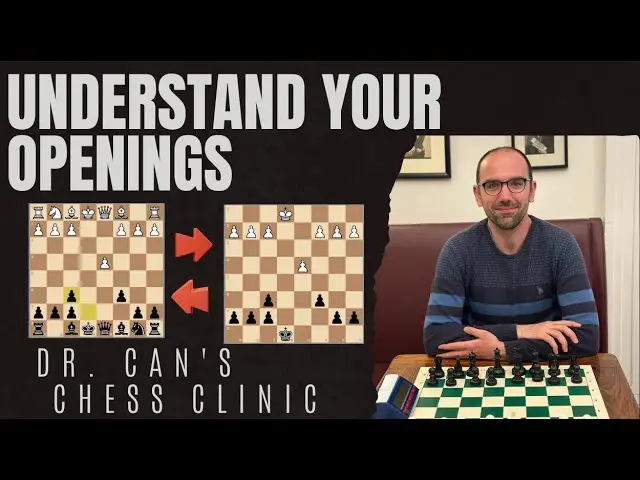
How to Learn And Understand Chess Openings
Intermediate
How to Learn And Understand Chess Openings

Moderator This is exactly what it says - a real framework for how to approach a new opening: find where your pieces belong, learn the pawn breaks, understand the ideas instead of memorizing moves. That's the core of how you should study openings.

Reviewer Clear and practical - you can apply this to any opening you're studying.

3.2
Study Openings the RIGHT Way | Build a Chess Study Plan | Week 3 | Openings and Endgames
Intermediate
Study Openings the RIGHT Way | Build a Chess Study Plan | Week 3 | Openings and Endgames

Reviewer The memory-dump drill alone is worth the watch - a real self-test technique, not just generic advice.

Moderator Covers openings and endgame study methodology as part three of a study-plan series - concrete techniques (the memory-dump exercise, prioritizing which mates/endgames to drill first) rather than just telling you to 'study endgames.' Squarely a study-methodology topic.

3.2
How I Study Chess Openings
Intermediate
How I Study Chess Openings

Reviewer A genuine, usable system for building an opening study - not just 'use a database.'

Moderator Scoped to studying openings specifically, which is a real, central piece of 'how to study chess' rather than a tangent - he's not talking about openings theory, he's talking about the process of building and organizing opening study. That's squarely a study-methodology topic.

3.2
How To Learn & Study Chess Openings
Beginner
How To Learn & Study Chess Openings

Reviewer Clear, well-scaffolded, gives you real concepts to organize your own opening study around.

Moderator A structured three-part breakdown -- types of openings, how to use a database, how to analyze your own games -- that is explicitly about studying (openings specifically, a legitimate and common scope for this skill), not just playing them.

3.2
Don’t Study Chess Openings in 2026 (Do this Instead)
Beginner
Don’t Study Chess Openings in 2026 (Do this Instead)

Reviewer The live demo makes the advice concrete instead of just 'trust me, develop your pieces.'

Moderator Directly addresses how to approach improving at chess — arguing against opening memorization in favor of a piece-improvement thinking framework, demonstrated live against a bot with reasoning narrated throughout. This is exactly the meta-skill 'how to study chess' should cover.

3.1
HOW To Understand Chess Openings Instead Of Just Memorizing Them
Intermediate
HOW To Understand Chess Openings Instead Of Just Memorizing Them

Reviewer Explains why the advice works, then shows exactly how to apply it to a real opening.

Moderator Directly answers 'how do I study my openings for understanding' with real cognitive-science grounding (chunking) and a concrete worked example (Caro-Kann structure into a pawn endgame) — squarely on topic.

3.1
How grandmasters study chess openings
Advanced
How grandmasters study chess openings

Reviewer Less a how-to, more real talk from the top -- and that honesty is worth something.

Moderator Direct interview answer to exactly this question -- how top players deal with memorizing and differentiating opening lines, including the real tension between computer evaluations and practical, human understanding. On-topic, if more conversational/anecdotal than a structured how-to.

3.1
How to Improve Your Chess Tactics
Intermediate
How to Improve Your Chess Tactics

Reviewer Practical and easy to apply to your own puzzle sessions.

Moderator This is squarely about the study process for tactics specifically - why puzzles work, what 'unlocking a pattern' means, and how to actually learn from a missed tactic in your own games. Exactly the kind of thing someone asking how to study chess needs.

3.0
Beginner Tips: How to Study Chess Openings
Beginner
Beginner Tips: How to Study Chess Openings

Reviewer A genuinely useful corrective for anyone tempted to study openings too early.

Moderator This is squarely about how (and how not) to allocate study time -- specifically arguing against beginners sinking hours into memorizing deep opening theory like the Najdorf, and toward endgames/middlegames/tactics first. Core 'how to study' territory even though it's framed around openings specifically.

3.0
How to Study Chess Openings the Right Way (And Actually Understand Them)
Intermediate
How to Study Chess Openings the Right Way (And Actually Understand Them)

Reviewer Real student game, real recurring theme, teaches understanding over memorization — just assumes you already know the opening.

Moderator Directly demonstrates a study method — reviewing a student's real games to find recurring strategic themes rather than just drilling opening moves — squarely part of 'how to study chess', just narrowed to openings specifically.

2.9
How A Chess Master Learns A New Opening
Intermediate
How A Chess Master Learns A New Opening

Reviewer Even tells you honestly when you're not the target audience yet.

Moderator Explicit process video: pick one opening, use an opening-explorer database, and pick which reference set (Masters/Lichess/your own games) fits your level. That's a real, transferable study method, not just opening content.

2.8
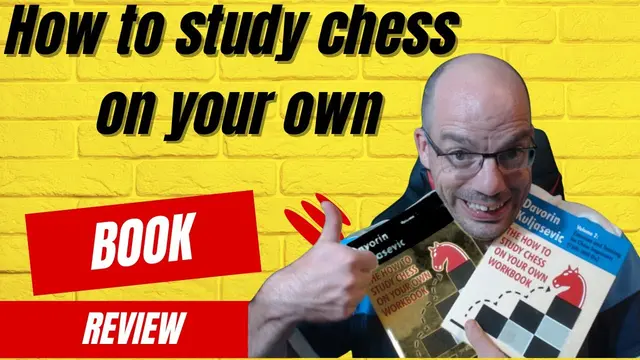
How to Study Chess on Your Own - Book Review
Intermediate
How to Study Chess on Your Own - Book Review

Reviewer Credible coach's take with a real worked example and a sharp, specific critique - not just a puff review.

Moderator It's a book review, not a direct 'here's how to study' lesson, but the books being reviewed are literally study methodology and the review conveys real structure (visualization, tactics, middlegame, endgame chapters) and a worked example. Relevant by way of being a credible resource recommendation with substance, not just 'buy this.'

2.8
Comment 2000 and I'll send you my free masterclass on ...
Intermediate
Comment 2000 and I'll send you my free masterclass on ...

Moderator How to learn openings without memorising lines: understand why each move is played and what the plan is, worked through with the French Defence (fight for the center, why not to take on e4, why Nd7, what to attack after f4). Squarely about how to study, here for openings. Closes with a pitch for a free course.

Reviewer Strong, usable advice: learn the plan behind each opening move and you won't forget the line.

2.7
The Climb Starts Now | Build a Chess Study Plan | Week 1 | Puzzles
Beginner
The Climb Starts Now | Build a Chess Study Plan | Week 1 | Puzzles

Reviewer Good, focused starting point - doesn't try to cover more than a first step should.

Moderator Week 1 of a multi-part series, scoped specifically to puzzles as one component of an overall study plan being built across the series. Relevant and on-topic, just a single piece of the broader 'how to study' picture rather than the whole system.

2.7
How To Learn A New Chess Opening 📘👀
Beginner
How To Learn A New Chess Opening 📘👀

Reviewer The 'are you even ready for this' self-check is the best part.

Moderator Genuinely about study strategy: opens by telling you NOT to study openings yet if your games are full of blunders, using real low-rated games to show what 'too many blunders' looks like before giving the 3-step opening-learning process.

2.6
Chess - Tip to Become a Better Chess Player. Listen to Yourself!
Intermediate
Chess - Tip to Become a Better Chess Player. Listen to Yourself!

Reviewer Good idea, clunky delivery — the metaphor gets repeated more than it needs to be.

Moderator Core message is a genuine study method: diagnose which phase of the game you're actually weak in (openings/calculation/strategy/endgame) via test positions, then direct your study time there instead of training everything evenly. That's a real answer to 'how should I study,' delivered through worked examples.

2.6
Chess lesson prep: GRWM + study tips to reach 2000 Elo
Intermediate
Chess lesson prep: GRWM + study tips to reach 2000 Elo

Reviewer The format is silly, but the study advice buried in it is genuinely solid.

Moderator Underneath the get-ready-with-me format, the actual questions and answers are squarely about how to study -- how much time to invest, splitting time between strategy and tactics, and using an engine before a coach to review your games. That's a real study plan, just delivered between mascara and eyebrow gel.

2.4
Chess Openings for Beginners: 3 Things to Learn Instead of ... - TikTok
Beginner
Chess Openings for Beginners: 3 Things to Learn Instead of ... - TikTok

Moderator How to learn an opening without memorising it: know the pawn structure, the main plan and where your minor pieces usually go, shown with the French Defence and the pressure on d4. It's a method for studying one part of the game, so it sits under how to study chess, though it's narrower than the whole subject.

Reviewer A practical way to study your openings: structure, plan, piece squares. Short, but you can use it straight away.

2.0
How to Study Chess Openings the Right Way (Using Stats + Free Tools!)
Beginner
How to Study Chess Openings the Right Way (Using Stats + Free Tools!)

Reviewer Decent underlying idea, but a lot of it is a tour of his own website.

Moderator About choosing what to study and in what order using database frequency — legitimate part of 'how to study chess', though narrower (opening choice specifically) and wrapped around promoting his own downloadable repertoire.

1.9
Train chess calculation every day! Thats the best way how to play better chess!
Intermediate
Train chess calculation every day! Thats the best way how to play better chess!

Reviewer Good puzzles if you're watching along, but thin on the actual how-to-practice guidance.

Moderator Opens and closes with an explicit study recommendation — train your calculation daily — and spends the body of the video demonstrating exactly that with tactical puzzles. A real study method (deliberate daily tactics practice) being modeled in real time, squarely relevant even though most of the runtime is puzzle-solving rather than talking about methodology in the abstract.

1.8
How to Improve Quickly at Chess: Practical Tips from a ...
Beginner
How to Improve Quickly at Chess: Practical Tips from a ...

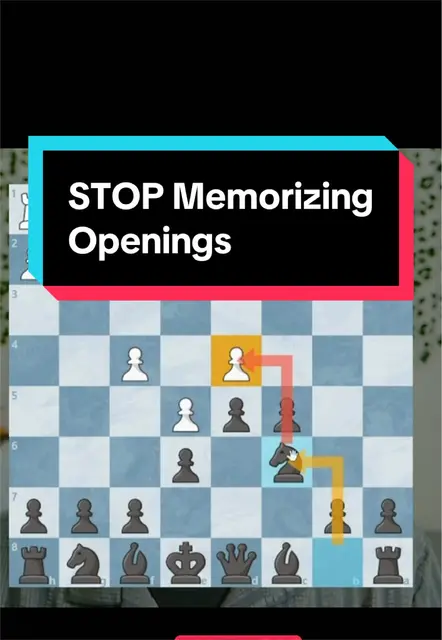
Moderator A player shares how he went from 300 to 2000 in two years: no opening memorization, instead learn principles by watching strong players explain their thinking. That's a study approach in broad strokes, told as a personal story, and it ends on a teaser for a fuller breakdown.

Reviewer Sound idea: absorb principles from strong players' commentary instead of memorizing lines. But it's thin, and it stops where the actual plan would start.

1.7
Chess Beginners: Use this method to win more games 🫡
Beginner
Chess Beginners: Use this method to win more games 🫡

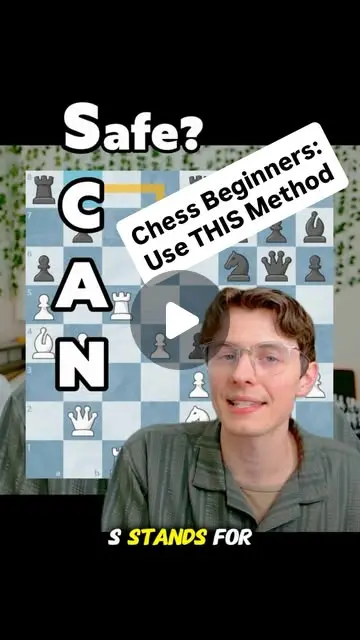
Moderator SCAN is presented as a method to adopt in your games -- check for safety, then checks and captures, then attacks -- which is closer to a practice habit you build through study than a pure in-game trick, and it's explained with a full worked example.

Reviewer A clear, memorable process, walked through on a real position -- genuinely useful.

1.6
"Comment " TACTICS " for the lichess study link "Strategy ...
Intermediate
"Comment " TACTICS " for the lichess study link "Strategy ...

Moderator Recommends three tactics books (Winning Chess Tactics, Learn Chess Tactics and a huge problem collection to grind through) as the route to better tactics. That's one slice of studying chess, the material, rather than a full study plan.

Reviewer Solid book picks if you want sharper tactics, but it's a short list with no advice on how to work through them.

1.4