Middlegame planning in Chess

39 free video lessons, each tagged by level

What coaches agree on

  • Look at the pawn structure before anything else - it points you toward where to attack and where a pawn break will open lines for your pieces.
  • Before you look for a specific move, weigh up the position imbalances - space, piece activity, king safety, pawn structure - and let that tell you the plan.
Show more
  • When there is no clear plan, find your least active or worst-placed piece and look for a way to improve it.
  • A plan is not only about your own ideas - look at what your opponent is trying to achieve and consider stopping their plan too.
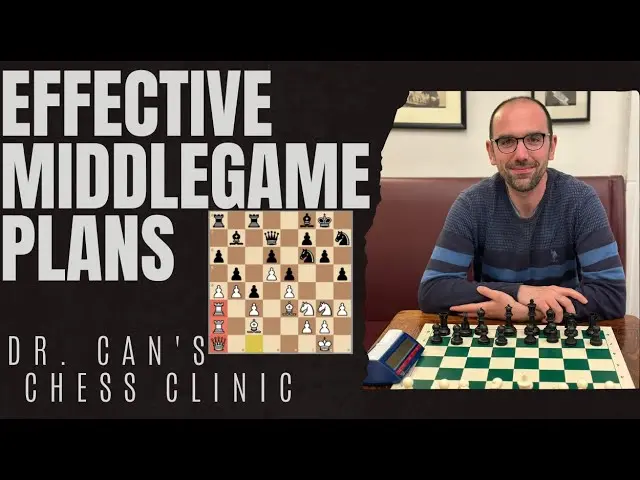
Middlegame Mastery: How to Form Plans That Win!
Advanced
Middlegame Mastery: How to Form Plans That Win!

Reviewer Teaches you how to reverse-engineer a plan, not just what the plan is - that's the whole game right there.

Moderator This is a masterclass in exactly what 'middlegame planning' means - reads imbalances off the board (piece concentration, protected passed pawn, blockading queen, outposts), rules out the tempting-but-wrong options with real reasoning, then reverse-engineers a concrete multi-move route to the one square that wins. Nothing tangential anywhere in this.

4.0
How to Find the Right Plan in Chess Middlegames
Advanced
How to Find the Right Plan in Chess Middlegames

Reviewer Outstanding: multiple real plans, weighed against each other, honest about engine vs practical truth.

Moderator As squarely 'middlegame planning' as it gets: it's a live demonstration of the thinking process (development, activity, bishop pair, pawn structure) used to generate multiple candidate plans (kingside rook lift, c-file play, queenside space) and weigh which one is actually real. Every sentence serves the subskill.

3.9
[FULL GUIDE] How to PLAN in the MIDDLEGAME in Chess!
Intermediate
[FULL GUIDE] How to PLAN in the MIDDLEGAME in Chess!

Reviewer Explains the underlying theory, not just 'here are 10 plans'.

Moderator A proper theory lesson on planning itself — 'pawns decide the plans, pieces execute them,' reading which side of the board is yours to attack, understanding open vs closed centers. About as squarely on-skill as it gets.

3.8
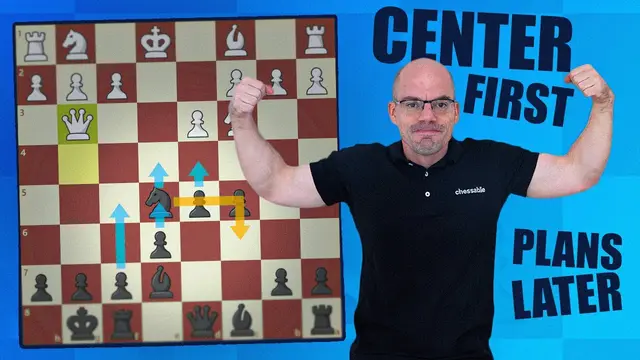
Lost in the Middlegame? The Winning Plan Is in the Pawn Chain
Intermediate
Lost in the Middlegame? The Winning Plan Is in the Pawn Chain

Reviewer Ties a specific move to a general rule you can actually reuse in your own games.

Moderator Three positions, one throughline: recognizing when a stable-looking pawn chain is actually a target and finding the central break that blows it up. Directly ties back to a broader principle (flank attacks only work with a stable center) which is exactly the kind of pattern-recognition 'middlegame planning' should be teaching.

3.8
10 Useful Rules to Master the Middlegame in Chess
Beginner
10 Useful Rules to Master the Middlegame in Chess

Reviewer The candidate-move filter (attack on their half) is worth stealing.

Moderator Real planning heuristics — activate your least-active piece, deny castling rights before anything else matters, don't burn a permanent pawn weakness for a one-move threat, attack on your opponent's half of the board. All squarely on-skill.

3.7
Why You Never Know What to Do in the Middlegame
Intermediate
Why You Never Know What to Do in the Middlegame

Reviewer The 'see ideas, not moves' framing alone is worth the watch.

Moderator Nails a real, specific middlegame theme — opposite-colored bishops and who's allowed to attack — rather than generic advice. That's exactly the kind of pattern recognition that separates 'planning' from just making moves.

3.7
You'll Never PANIC in Middlegame After Learning These 7 Simple Rules
Intermediate
You'll Never PANIC in Middlegame After Learning These 7 Simple Rules

Reviewer Explains WHY trading when ahead works, with the math, not just 'they say to.'

Moderator Covers real planning terrain — trading when materially ahead (with percentage-math reasoning), opposite-side pawn storms, and pawn sacrifices to rip open a file. Solid middlegame content throughout.

3.7
I Was Clueless in the Middlegame, Now 10 Rules Forced Me to Win (Copy My Plan)
Beginner
I Was Clueless in the Middlegame, Now 10 Rules Forced Me to Win (Copy My Plan)

Reviewer Good at showing you the trap before you fall into it.

Moderator Direct hit on the skill: queen placement logic, why NOT to trade into your opponent's development, activating the sleepy rook, and a clear-eyed take on when a sac attack is or isn't sound. Every rule is a real planning decision.

3.7
How to come up with a Plan | Basic Planning in Chess | Beginner Level | IM Alex Astaneh
Beginner
How to come up with a Plan | Basic Planning in Chess | Beginner Level | IM Alex Astaneh

Reviewer Textbook example, explained the right way round: evaluation first, move second.

Moderator Literally defines what a plan is before doing anything else, then uses the Capablanca-Tartakower classic to show evaluation leading to plan leading to execution, one of the cleanest possible teaching examples. Nothing tangential; this is the foundation of the subskill.

3.7
The ONLY Chess Middlegame Guide You Need [Simple & Best]
Beginner
The ONLY Chess Middlegame Guide You Need [Simple & Best]

Reviewer Explains the reasoning behind every move, not just the move.

Moderator Textbook middlegame-planning lesson from a titled coach: develop the queen to a safe central square, evaluate trades on their merits instead of reflexively, activate the passive rook, then branch into a sac attack or a quieter plan. Exactly the skill, explained as a repeatable process.

3.6
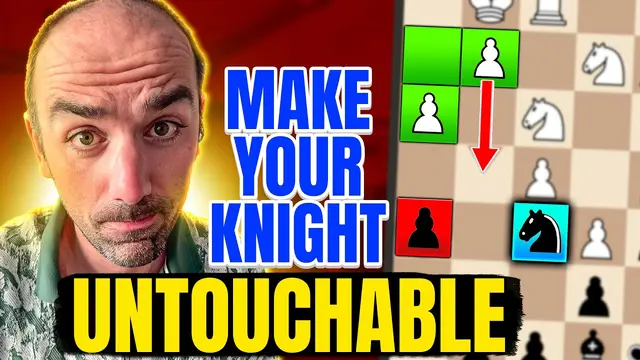
The Knight Pattern That Instantly Improves Your Middlegame
Intermediate
The Knight Pattern That Instantly Improves Your Middlegame

Reviewer Teaches you to stabilize an outpost, not just find one - and shows it working across different openings.

Moderator Directly about recognizing and executing a specific, recurring middlegame plan - get the knight to an outpost and then play the pawn move that locks it there for good - demonstrated across multiple openings (Caro-Kann-ish start, King's Indian) to prove it's a generalizable pattern rather than a one-off trick.

3.6
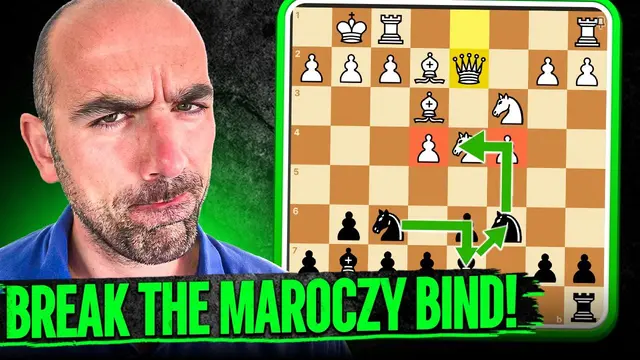
Crush the Maroczy Bind with These 6 Essential Patterns! (Accelerated Dragon Middlegame Ideas)
Advanced
Crush the Maroczy Bind with These 6 Essential Patterns! (Accelerated Dragon Middlegame Ideas)

Reviewer If you play the Accelerated Dragon or face the Maroczy Bind, this is excellent - explains the why behind every pattern.

Moderator This is deep, legitimate middlegame planning - trade to relieve a space disadvantage, avoid the greedy capture that creates a lasting weakness, use a structural break (e5) that looks wrong on paper but wins the dark squares. Marking it just under a clean 2 because it's really opening-structure-specific theory (Maroczy Bind / Accelerated Dragon) rather than a general-purpose planning lesson - hugely valuable if you play this structure, close to useless if you don't.

3.4
Simplifying Chess Middlegame: Easy Ways to Find Effective Plans
Intermediate
Simplifying Chess Middlegame: Easy Ways to Find Effective Plans

Reviewer Turns 'how do I find a middlegame plan' into an actual worked example instead of a slogan.

Moderator Directly answers a viewer's question about converting an opening edge into a middlegame plan, then walks a real game showing exactly that: pawn center advantage translated into a kingside attack. Second example (opposite-side castling) starts before the clip cuts off. Stays on-topic the whole way; not a clean 2 only because some time goes to framing the question itself rather than the plan.

3.4
Chess Middlegame Planning [2 Key Ideas]
Intermediate
Chess Middlegame Planning [2 Key Ideas]

Reviewer Clean, teachable framework, though I wish he'd shown it on a tougher, closer position.

Moderator Dead center of the subskill: the whole video is a GM walking through how to evaluate a position and derive a plan from it. He frames it explicitly as 'the question that puzzles most chess players' and answers it directly with a two-factor method (material, then activity) applied move by move to a real position. Nothing tangential; every minute is planning instruction.

3.4
"The Truth About Middlegame Plans at 1000 Elo"
Beginner
"The Truth About Middlegame Plans at 1000 Elo"

Reviewer Cuts straight to a plan-finding heuristic that actually works -- no fluff.

Moderator Literally a coach reviewing a student's real game to find the middlegame plan -- this is the sub-skill in action, not adjacent to it.

3.2
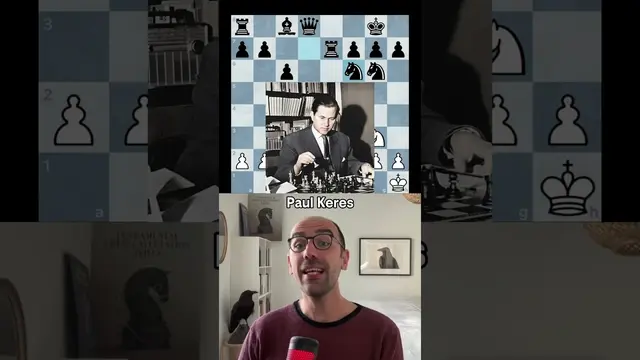
How Grandmasters Plan Their Middlegame #chess #middlegame #botvinnik #keres #strategy #puzzle
Advanced
How Grandmasters Plan Their Middlegame #chess #middlegame #botvinnik #keres #strategy #puzzle

Reviewer Good heuristic (count your break's supporters), but assumes you already speak the positional vocabulary.

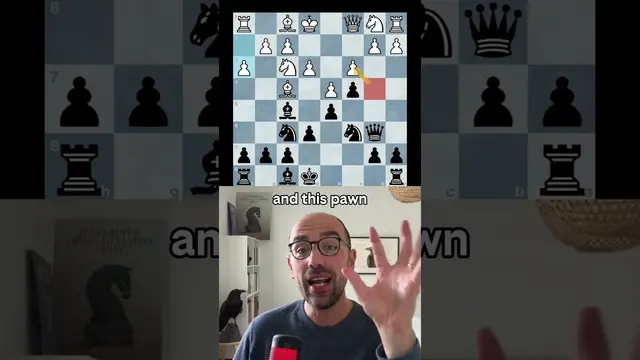
Moderator Short but on-target - identifies a coordinated push toward one pawn break (E4), counts the pieces supporting it, and shows the multi-purpose defensive/preparatory move (Qf2) in response to black's try. All middlegame-planning, no filler, just brief.

3.2
Middlegame Mastery: Essential Concepts and Planning in Chess
Intermediate
Middlegame Mastery: Essential Concepts and Planning in Chess

Reviewer Solid imbalance-based teaching, with a bit of a coaching-plug tail at the end.

Moderator Exactly the subskill: explicitly teaches identifying imbalances (bad bishop, space, kingside attack potential) BEFORE looking at candidate moves, then applies that method to a full game. This is the textbook definition of middlegame planning methodology, not just one technique.

3.2
How to Find a Winning Middlegame Plan in Any Chess Position ...
Intermediate
How to Find a Winning Middlegame Plan in Any Chess Position ...

Moderator Squarely middlegame planning: a method for finding a plan when you do not know what to do - look for a weak square, if there is none improve your worst piece, and work out which piece that actually is - then keep every manoeuvre consistent with the plan.

Reviewer Solid method for finding a plan - weak square, then worst piece, then every move on plan - though always check tactics first.

3.1
This Is Your Worst Piece | Chess Middlegame Strategy
Beginner
This Is Your Worst Piece | Chess Middlegame Strategy

Reviewer A checklist you can actually use mid-game -- walks all the way to a real checkmate.

Moderator The 'improve your worst piece' checklist is a classic, central middlegame-planning tool -- exactly what this sub-skill covers.

3.1
A Beautiful Middlegame Plan Against the London System #chess #openings #middlegame #strategy #tips
Intermediate
A Beautiful Middlegame Plan Against the London System #chess #openings #middlegame #strategy #tips

Reviewer Good plan, good reasoning - just wish it were longer and the move references were cleaner.

Moderator On-topic middlegame plan tied to a specific structure (anti-London queenside pawn chain pointing at B5-B4), correctly framed as 'what's your long-term plan here.' Slightly narrower than a general-principles video since it's really an opening-specific plan, but that's still squarely a middlegame plan being taught.

3.1
Not sure what to do in the middlegame stage? Here's a ...
Intermediate
Not sure what to do in the middlegame stage? Here's a ...

Moderator Shift focus from minor pieces to queen and rooks once the opening's done - that's a real middlegame planning principle, shown with an actual Fischer game.

Reviewer Sharp tip, and the Fischer example sells it.

3.0
The Golden Rules for the Middlegame | Chess Principles | Improver Level | IM Andrey Ostrovskiy
Intermediate
The Golden Rules for the Middlegame | Chess Principles | Improver Level | IM Andrey Ostrovskiy

Reviewer Solid principles tied to a real position, a bit more assertion than deep reasoning.

Moderator Directly about planning: frames it as answering 'where to play' and 'what to do,' ties the answer to king position and pawn majorities, and applies it concretely (opposite-side castling means attack the king, pawn majority tells you which side to expand on). Squarely on-topic, if a bit more principle-recitation than independent analysis.

3.0
10 Best Chess Plans for the Middlegame
Beginner
10 Best Chess Plans for the Middlegame

Reviewer Well-framed plans with clear reasons behind them, good for the 'now what?' moment.

Moderator Starts from the classic 'what do I do now?' moment once development is done, then gives plans: break open the center with e5 to open files for the rooks, launch a pawn storm when the kings are castled on opposite sides (g4, h4, h5 to pry files open), and trade off your passive bishop for an active piece. Exactly middlegame planning.

2.9
This Word Changed My Chess | Chess Middlegame Strategy
Intermediate
This Word Changed My Chess | Chess Middlegame Strategy

Reviewer Concrete examples of piling onto a target -- easy to copy in your own games.

Moderator 'Targets' as an organizing concept for middlegame plans -- exactly the kind of practical heuristic this sub-skill is about.

2.9
How to ACTUALLY Use Your Pawns | Chess Middlegame Strategy
Intermediate
How to ACTUALLY Use Your Pawns | Chess Middlegame Strategy

Reviewer Several clean worked examples -- mistake, reasoning, fix. Good stuff.

Moderator Pawn-move decision-making in the middlegame is a core part of planning -- when to push, when to hold, how a pawn move changes the whole structure. Squarely in the sub-skill, just approached through the pawns lens specifically rather than 'plans' in the abstract.

2.8
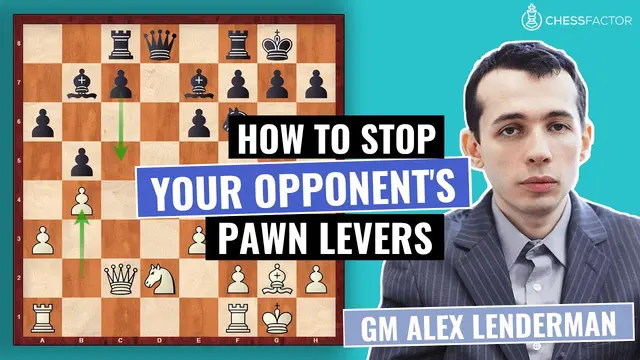
Prophylaxis against Pawn Levers - Strategic Planning | Chess Middlegame | GM Alex Lenderman
Advanced
Prophylaxis against Pawn Levers - Strategic Planning | Chess Middlegame | GM Alex Lenderman

Reviewer Best of the pawn-lever trilogy, a full strategic story, not just a line dump.

Moderator Prophylactic thinking, stopping the opponent's plan before it starts, is one of the highest-value planning concepts in the middlegame, and this video is built around exactly that using Kramnik-Carlsen and two of his own games. Solidly on-topic, just scoped to the prophylaxis angle.

2.8
Best Chess Plans for the Middlegame: 10 Practical ...
Intermediate
Best Chess Plans for the Middlegame: 10 Practical ...

Reviewer Clear, concrete attacking plans; the queen-in-front battery trick is worth the watch.

Moderator The middle stretch of a ten-plan series: building a battery on an open file (rook to e3, queen behind it, then a triple battery), a battery on the b1-h7 diagonal with the trick of putting the queen in front of the bishop so taking on h7 comes with mating threats, and a rook lift via f4 and Rf3 to g3 or h3 to swing a rook at the king. All genuine middlegame plans with worked examples.

2.7
5 Chess Middlegame tips for when you don't know what to ...
Beginner
5 Chess Middlegame tips for when you don't know what to ...

Moderator Five things to do in the middlegame when you don't know what to play: list your forcing moves (checks, captures, attacks), improve one of your pieces, trade off the opponent's most annoying piece, target their most annoying pawns, and go after undefended pieces. Each one is shown on a real position. Right on topic.

Reviewer Practical five-step checklist you can use in your next game.

2.7
How to Play Strategically in Middlegames — Chess ... - TikTok
Intermediate
How to Play Strategically in Middlegames — Chess ... - TikTok

Reviewer Fast-paced but it actually teaches you how to think, not just what to play.

Moderator This is exactly what middlegame planning looks like in practice — improving pieces, restricting the opponent, spotting an undefended piece — shown through a real game rather than told abstractly.

2.6
Disadvantages of Pawn Levers - Strategic Planning | Chess Middlegame | GM Alex Lenderman
Advanced
Disadvantages of Pawn Levers - Strategic Planning | Chess Middlegame | GM Alex Lenderman

Reviewer Has a real, reusable rule of thumb buried in a rough personal-game recap.

Moderator Same family as part one: this is the 'when a thematic break backfires' half of pawn-lever planning, which is squarely a planning judgment call. Still a narrow slice of planning as a whole, not a general framework, and it's again built entirely around one player's own games.

2.5
How to Calculate | Chess Middlegame Strategy
Intermediate
How to Calculate | Chess Middlegame Strategy

Reviewer Teaches the actual thought process, not just 'calculate more' -- solid.

Moderator Calculation is the engine that makes any middlegame plan real -- he frames it explicitly as 'come up with a plan, visualize the response, decide if it still works,' tying it to planning rather than raw tactics training. Not the purest 'planning' video in this batch, hence not maxing it.

2.4
Understanding Pawn Levers - Strategic Planning | Chess Middlegame |Advanced Level |GM Alex Lenderman
Advanced
Understanding Pawn Levers - Strategic Planning | Chess Middlegame |Advanced Level |GM Alex Lenderman

Reviewer Real GM insight, but it's a game recap more than a lesson, bring your own board.

Moderator Pawn levers are a real planning tool: deciding when to break the center or a flank is exactly what 'coming up with a plan' cashes out to in concrete terms, so this earns solid relevance. It's narrower than general planning though, one weapon in the toolbox rather than the toolbox itself, and the whole video stays inside deep forcing calculation of one game rather than the higher-level 'how do I decide what to do here' framing.

2.4
How to use Pawns to create Middlegame Plans in your Chess Games!
Beginner
How to use Pawns to create Middlegame Plans in your Chess Games!

Reviewer One useful rule of thumb (play where your pawns give you space), but it stops there.

Moderator For players under 1500 who reach the middlegame and don't know what to do: read your pawns first, picture them as mountain peaks, and play on the side where the peaks are highest, which is where you have more space. That's middlegame planning from pawn structure, right on the topic.

2.3
“What is the drawback of my opponent's last move?” Every ...
Intermediate
“What is the drawback of my opponent's last move?” Every ...

Moderator Aimed right at middlegame thinking: before you hunt for a move, ask what drawback your opponent's last move created and go after that weakness. Presented as part of a middlegame improvement series and taken through a position.

Reviewer A strong planning habit: ask what your opponent's last move weakened before you go looking for moves.

2.0