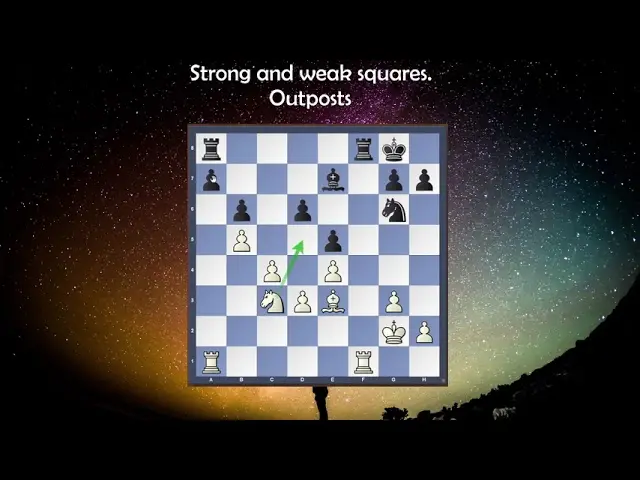
Intermediate
Moderator Entirely and precisely about strong and weak squares and outposts, built from a series of concrete examples.
Reviewer Excellent, example-driven lesson, shows several different ways to actually create and use a weak square.
3.9
34 free video lessons, each tagged by level
Moderator Entirely and precisely about strong and weak squares and outposts, built from a series of concrete examples.
Reviewer Excellent, example-driven lesson, shows several different ways to actually create and use a weak square.
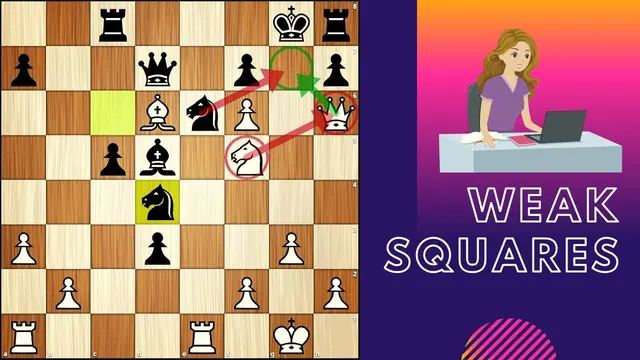
Moderator Thoroughly about outposts and weak squares, worked through a real master game.
Reviewer Great real-game example of how a weak king and weak squares go hand in hand.
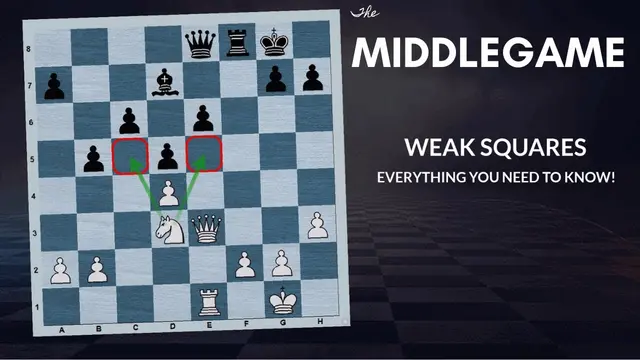
Reviewer Genuinely rich strategic teaching, shows exactly how outpost thinking shapes a real plan, move by move.
Moderator Deeply and specifically about outposts and weak squares, worked through a real opening line move by move.
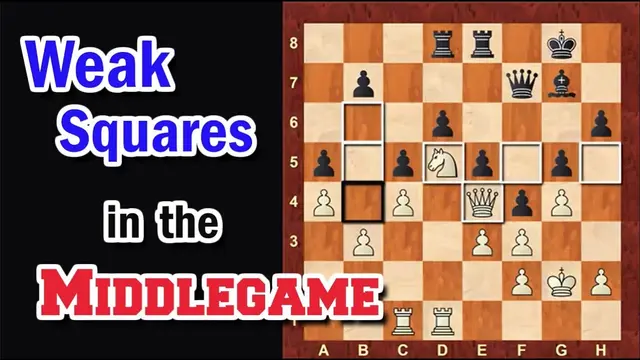
Reviewer Excellent -- teaches you to tell which holes actually matter, not just where they are.
Moderator This is as central to the skill as it gets -- defines weak squares/holes precisely, catalogs every hole in a real position, and explicitly separates the ones that matter for a plan from the ones that don't.
Reviewer Clear, systematic, and calls out the exact mistake that ruins an outpost - piece first, not pawn.
Moderator Title says it all and it delivers - basics/intermediate/advanced sections all built around the same single concept, no filler.
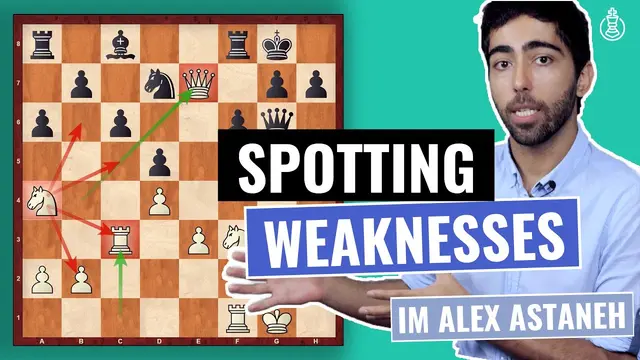
Reviewer Shows how one weakness chains into piece problems everywhere else on the board - excellent stuff.
Moderator Whole video is Capablanca systematically punishing Mieses's light-square pawn structure by piling every piece onto the dark squares. Every move he narrates gets tied back to the color-complex weakness. Couldn't be more on-topic.
Reviewer Ends with real, reusable questions to ask yourself - that's what makes this stick.
Moderator Dutch Defense miniature used purely to demonstrate identifying and then exploiting dark-square weaknesses (e5 outpost, Bf4-e5, mating combination on the weak color complex). Stays on topic throughout, and ends with an explicit checklist of questions to ask when hunting for weaknesses.
Reviewer Excellent -- the trade-off logic (which pieces to keep, which to trade) is the real lesson here.
Moderator A full real Fischer game built entirely around provoking, securing, and exploiting a d5 weak square. As central to the skill as it gets.
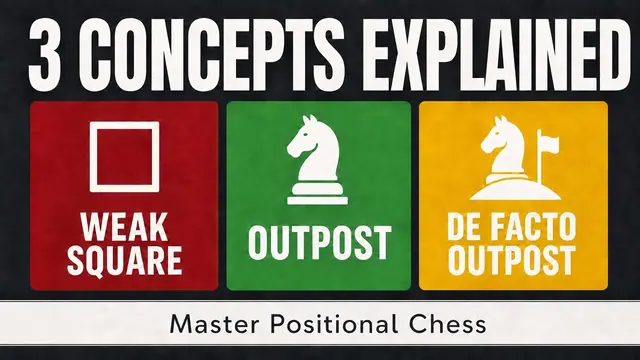
Reviewer Clears up a real, common confusion instead of repeating the same tired definition.
Moderator Entirely dedicated to untangling the exact terminology of this sub-skill - weak square vs outpost vs 'de facto outpost.' Nothing else discussed.
Reviewer This is the deep mechanic -- trading off the square's defenders -- most other videos skip.
Moderator Opens with a textbook definition (a weak square is one no pawn can ever protect, found on ranks 5-6 for black / 3-4 for white) then a full Smyslov game showing exactly how to provoke, fight for, and finally occupy d5 with a knight the opponent can't challenge. Squarely the sub-skill end to end.
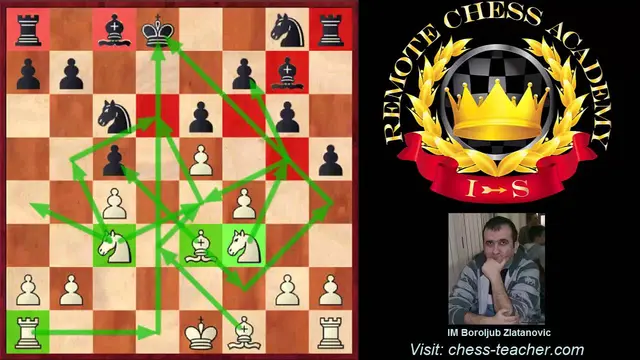
Reviewer Rich, detailed positional teaching - this is how strong players actually think about pawn structure.
Moderator Move by move dissection of exactly why g6 creates weak d6/f6/h6 squares and how white's whole plan (Bg7 problem, e5 push, knight to e4) is built around exploiting them. As tightly focused on weak squares as a game annotation gets.
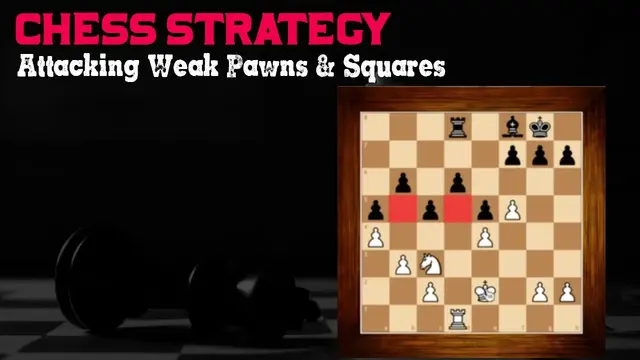
Reviewer Great teaching device - makes you spot the weaknesses yourself before showing the answer.
Moderator Centers on backward pawns and holes (b5/d5) as the target, walks a full game showing how white circles in on them, then gives a second position as a self-test. Slight breadth beyond pure 'weak squares' into backward pawns generally, but it's the same family of idea and squarely the point of the video.
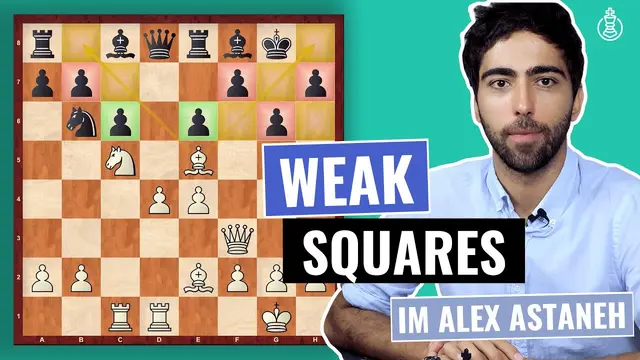
Reviewer Clean, correct, and concrete - a model explanation of what a weak square actually is.
Moderator This is a dedicated, structured lesson titled and organized entirely around defining and spotting weak squares - pawn structure, color complexes, concrete threats on d5/b5 in the example position. As on-topic as it gets.
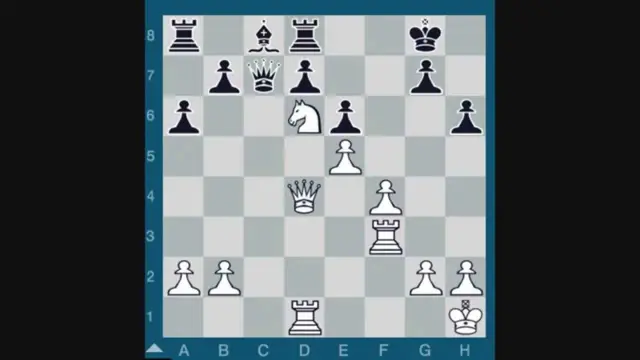
Reviewer Strong worked example -- watch how the knight on d6 slowly strangles black's whole position.
Moderator Same as another item in this batch almost word for word -- the d6-outpost game with the same maneuvers and the same 'principle of two weaknesses' payoff. Squarely on-topic regardless.
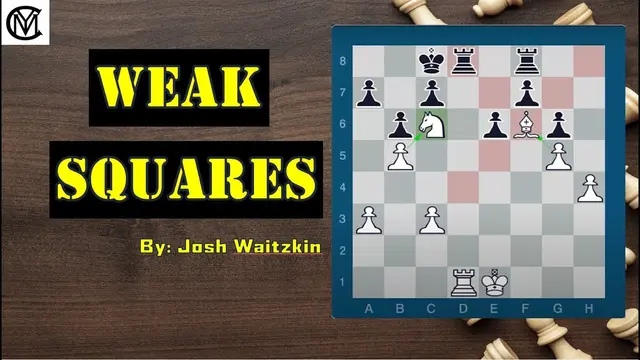
Reviewer Strong worked example -- watch how the knight on d6 slowly strangles black's whole position.
Moderator Squarely about identifying and occupying a weak square (d6) and converting the resulting positional grip into an attack. Exactly the skill.
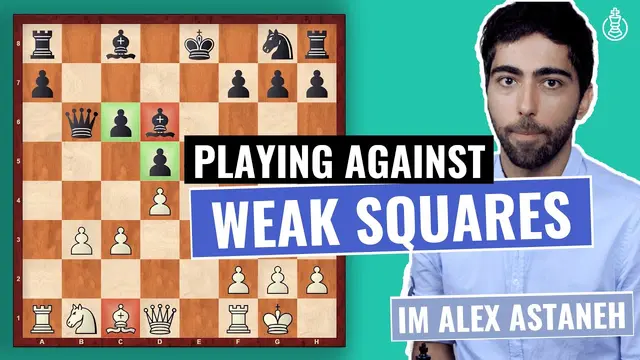
Reviewer Sharp IM commentary that flags the exact trade a weaker player gets wrong.
Moderator Whole clip is IM-level analysis of exploiting dark-square weaknesses in a real Karpov-Polgar game - squarely the sub-skill, just delivered through one specific case rather than general principles.
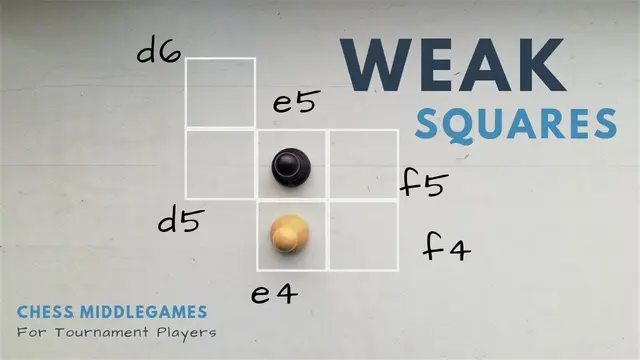
Reviewer Teaches you to actually reason about the square, not just memorize that outposts are good.
Moderator First video of a middlegame series and it's built entirely around weak squares and outposts - identifies d5/d6 immediately in a real Olympiad game and never wanders off theme.
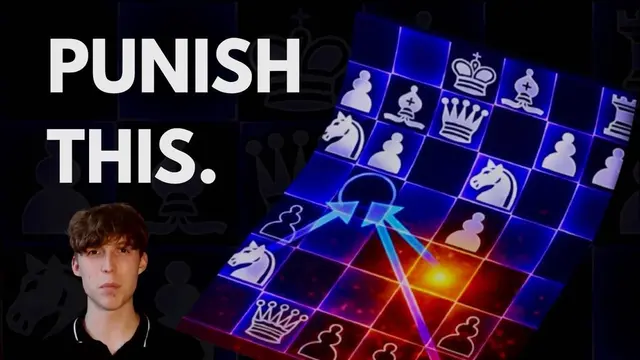
Reviewer Teaches the actual diagnostic -- check what your pawns still cover -- not just 'occupy the hole'.
Moderator Coach narrates his own tournament game and explicitly states the crucial fact for spotting weak squares -- look at which squares your pawns still protect vs which they've abandoned -- then shows d5 and the dark squares around the king becoming weak in real time and how he piles onto them. Entirely about this sub-skill.
Reviewer Solid method, just wish the delivery were as tight as the content.
Moderator Explicit methodology for identification: look at the most advanced pawn, check what's behind it, separate static vs dynamic weaknesses. Everything in this excerpt serves the identification process directly.
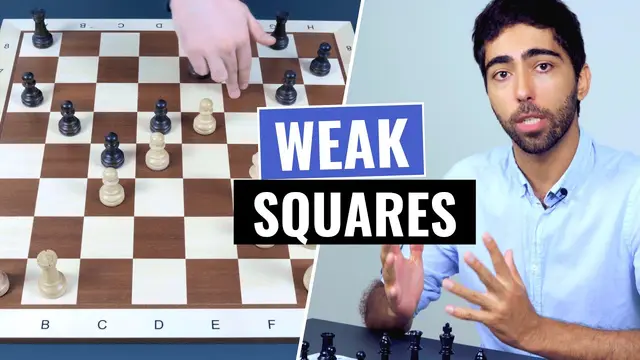
Reviewer Solid -- the 'whole color complex is weak' framing is a step up from just spotting one square.
Moderator Squarely about identifying weak squares via color complexes from pawn structure, then following the game as the weakness gets exploited. On-topic throughout.
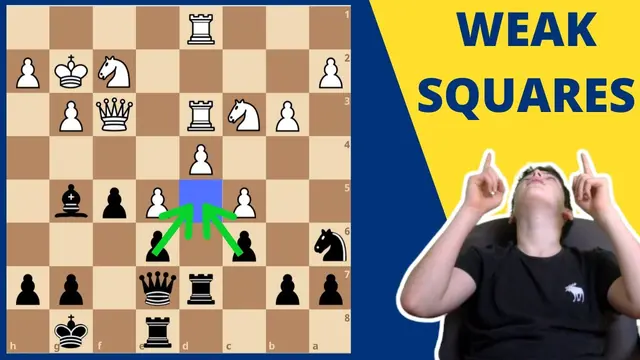
Reviewer Explains the 'why' clearly enough that it actually sticks -- good first lesson on the topic.
Moderator As textbook as it gets: defines a weak square as one your pawns can no longer contest, shows the mirrored strong/weak square pair created by a pushed pawn duo, and walks straight into placing a knight as an outpost. Every minute serves this exact sub-skill.
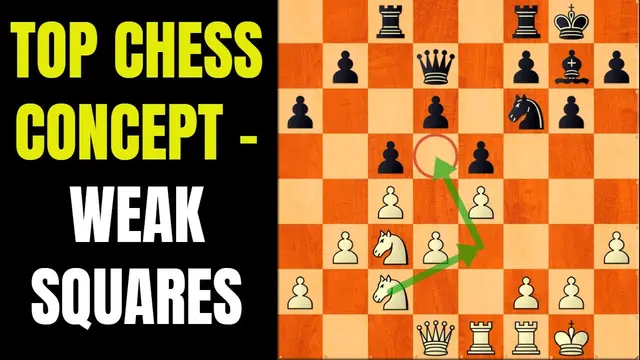
Reviewer Good, specific correction -- don't jump to the outpost before you can actually keep it there.
Moderator Defines the concept and works two real examples of identifying and fighting for a weak square. Squarely on-topic.
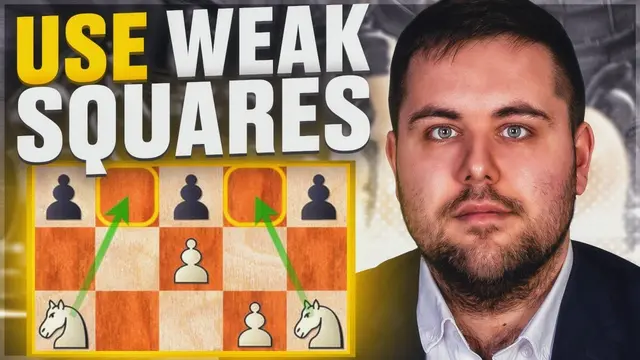
Reviewer Real master-game example of a weak square being created and exploited -- the ideas land even if the narration is rough.
Moderator Squarely about outposts and weak squares -- uses a real Alekhine game to show how a weak e5 square gets created, occupied by a knight, and converted into a winning advantage.
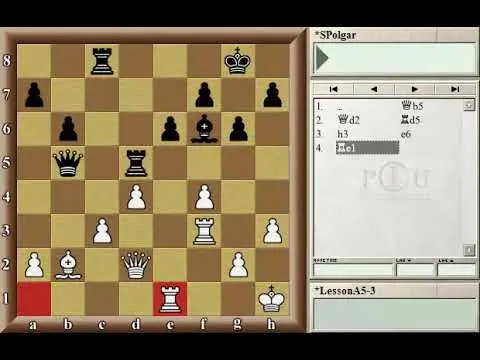
Reviewer A full, real demonstration of turning one weak square into a whole game plan.
Moderator Same series framing as the Fischer video - billed as weak squares/outposts PLUS king activity in endgames PLUS a tactical finale - but the visible transcript is entirely and extensively the weak-squares portion, a full Botvinnik-Flohr walkthrough.
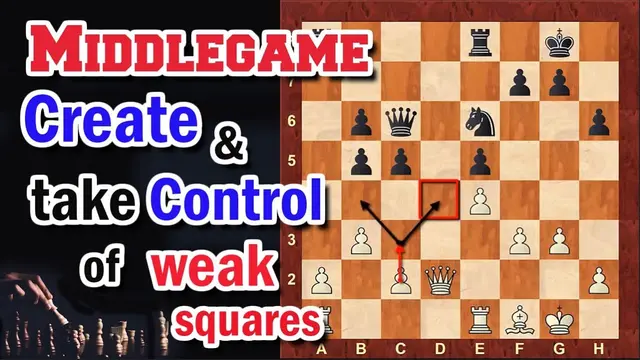
Reviewer Solid, example-driven teaching -- you'll actually understand how the hole got created.
Moderator Straight middlegame coaching on holes/weak squares -- the whole video is spotting a hole (e6/d5), deciding how to fight for it, and converting it into an outpost across several annotated lines. Explicitly framed as part 2 of a weak-squares series, so it doesn't drift into unrelated material.
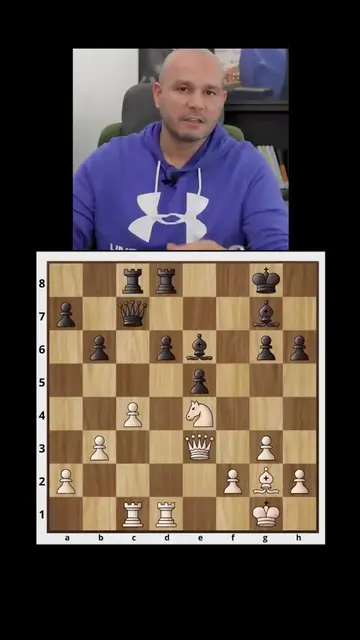
Moderator Squarely on topic: defines a weak square (d5, which no enemy pawn can cover), says to occupy it with a piece rather than a pawn, names the knight as the ideal occupant, and trades off the only bishop that could contest it so the square becomes permanently yours.
Reviewer Short, clear intro: spot the hole, remove its defender, plant a knight there.
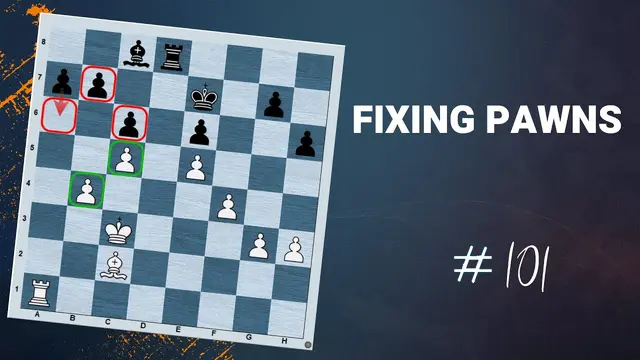
Reviewer Clear step-by-step plan you could actually apply, plus a practice position to test yourself.
Moderator Squarely about deliberately provoking a6 to fix a permanent hole on b6 and then exploiting it with king infiltration -- this is the 'create' half of weak squares (as opposed to just occupying one that's already there), which is exactly on-topic for this sub-skill.
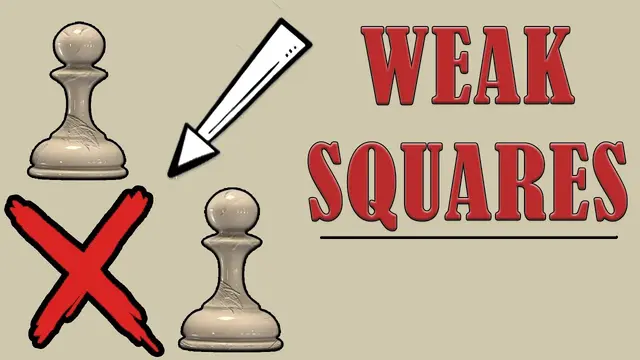
Reviewer Decent, correct examples, though light on the 'why' compared to others here.
Moderator Three separate positions, all specifically about identifying a weak square and getting a piece onto it. On-topic.
Reviewer Fine as one instructive example, but it won't teach you how to find these squares on your own board.
Moderator Whole video is built around a single annotated master game and the narration keeps coming back to the d5/outpost theme explicitly - 'this move creates a weak square', 'excellent outpost for his knight' - it's not just background color, it's the throughline. Docked slightly because it also credits the win to 'many factors' and 'distinguished positional play' more broadly, so it's not laser-focused on weak squares alone.
Reviewer Game one lands well; game two rushes past the point it set up.
Moderator Both games are framed around weak squares (f4 for a centralizing king, then d4/c6/e6 holes from a queenside pawn storm), so it's on-topic, but the connection to the concept gets thinner as the moves fly by -- especially game two, which turns into a move-list recitation with the weak-square idea only mentioned at the start.
Reviewer Good real-game demonstration of planting a knight on a weak square and cashing in.
Moderator Title bills this as three separate themes - weak squares/outposts, king activity in pawn endgames, and a tactical finish - and the visible transcript is only the first of those. Good content but the video isn't built around this one sub-skill alone.
Moderator This is about backward and weak pawns as attackable targets rather than about occupying weak squares with pieces, a closely related idea, but a different throughline than outposts.
Reviewer Fun, clear explanation of what makes a pawn weak and how to go win it.
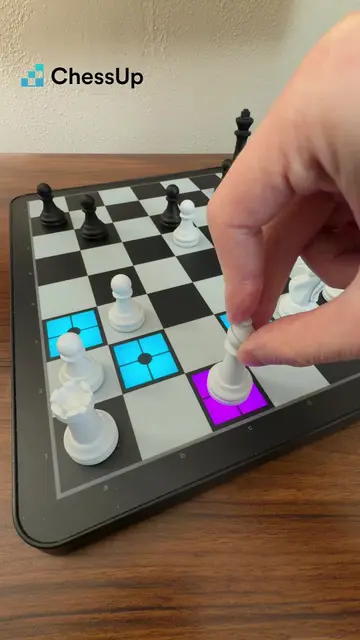
Moderator The reasoning behind knight outposts: bishops and rooks can do their work from a distance, but a knight has to be planted on the opponent's half, backed by a pawn, to control important squares. On topic, though it skips weak squares and the key outpost condition that no enemy pawn can chase the knight away (the post's caption adds that part).
Reviewer Good idea, clearly put, but it's a 25-second teaser. You get the why of a knight outpost, not how to find or build one.
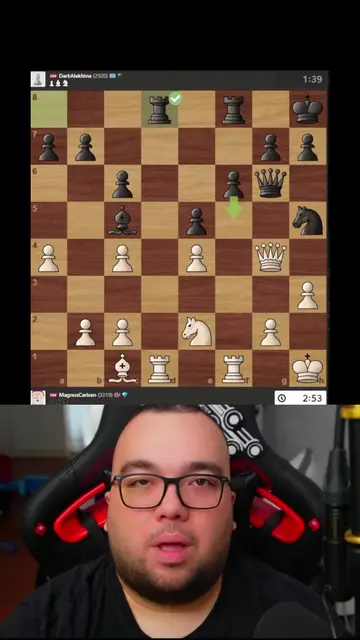
Reviewer Good model game for a knight outplaying a bishop. You pick up the outpost idea by watching rather than having it explained.
Moderator Walk-through of a Carlsen endgame on the good knight versus bad bishop theme. Outposts are part of it (c5 creates a post for the knight on d6, and his pawns go on the bishop's opposite color) but the subject is knight versus bishop, not outposts as such.